
For more than two decades, SEO followed a simple formula.
Rank higher.Get more clicks.Generate more traffic.
That formula no longer holds true.
A marketer can spend months earning a top-three Google ranking and still watch organic traffic decline. The reason isn't poor SEO. It's because users are increasingly getting answers before they ever click.
Search is evolving from a navigation system into an answer engine. As a result, traffic without conversion is just noise.
And that changes everything!
Search Has Entered the Zero-Click Era
In 2024, SparkToro and Datos found that 58.5% of Google searches in the U.S. ended without a click to any website. Searchers either found their answer directly on Google or refined their query without visiting a page. Search Engine Land independently reported the same findings.
Fast forward to 2026, and SparkToro's latest analysis suggests the number has climbed to 68%, driven largely by AI-generated search experiences.
The implication is enormous.
For the first time in search history, visibility and traffic are becoming two different things.
AI Is Changing What It Means to Rank
When Google launched AI Overviews, many marketers treated it as another SERP feature.
However, AI Overviews fundamentally change how information is consumed.
Instead of showing ten blue links, Google increasingly synthesizes information into a single answer. The same behavior is happening inside ChatGPT, Gemini, Claude, and Perplexity.
A recent academic study analyzing 11,500 search queries found that AI Overviews appeared for more than half of representative user searches and were displayed above traditional organic results. The study also found that sources cited by AI systems differ significantly from traditional search rankings.
In other words: Being ranked is no longer the same as being referenced.
The Traffic Decline Is Already Visible
Gartner predicts that by 2028, brands could lose 50% or more of their organic search traffic as users increasingly adopt AI-powered search experiences.
Another forecast predicts traditional search volume will decline by 25% as users shift toward AI assistants and conversational interfaces.
The impact is already showing up across publishing and media.
According to Chartbeat data reported by Axios, smaller publishers have experienced search referral declines of up to 60% over the past two years.
This isn't evidence that SEO is dying.
It's revealed that the distribution model is changing.
The New Currency of SEO: Citations
In the traditional search era, rankings were the primary goal.
In the AI era, citations are becoming equally important.
When ChatGPT, Gemini, or Google's AI Overview generates an answer, it selects information from sources it considers credible and relevant.
The brands that consistently appear across trusted websites, research studies, expert content, industry publications, and community discussions are more likely to be referenced.
This creates a new SEO objective: Become a source worth citing.
The shift resembles what happened with backlinks twenty years ago.
Back then, Google rewarded websites that others linked to.
Today, AI systems increasingly reward brands that others mention, reference, and discuss.
What Winning Brands Are Doing Differently
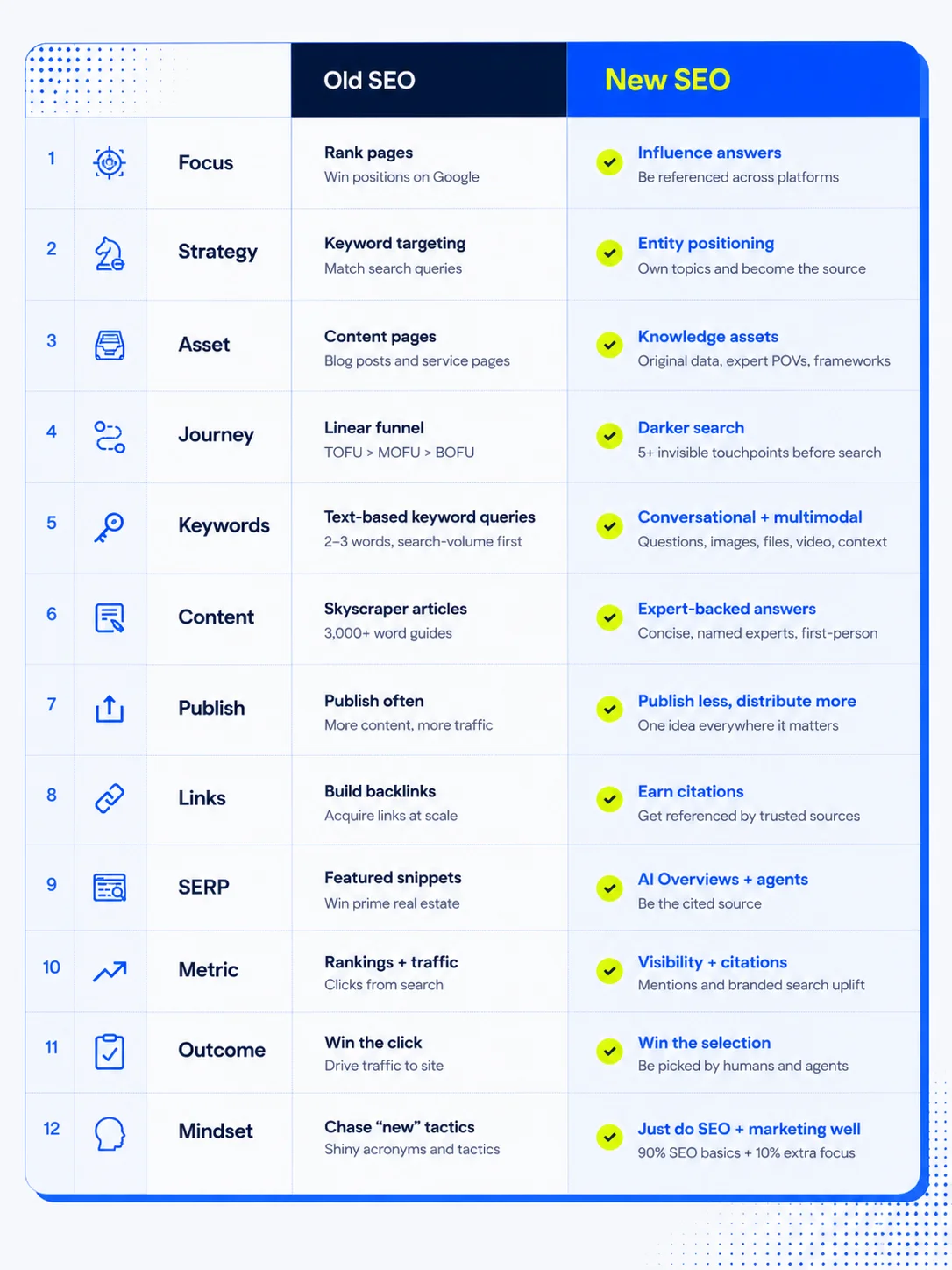
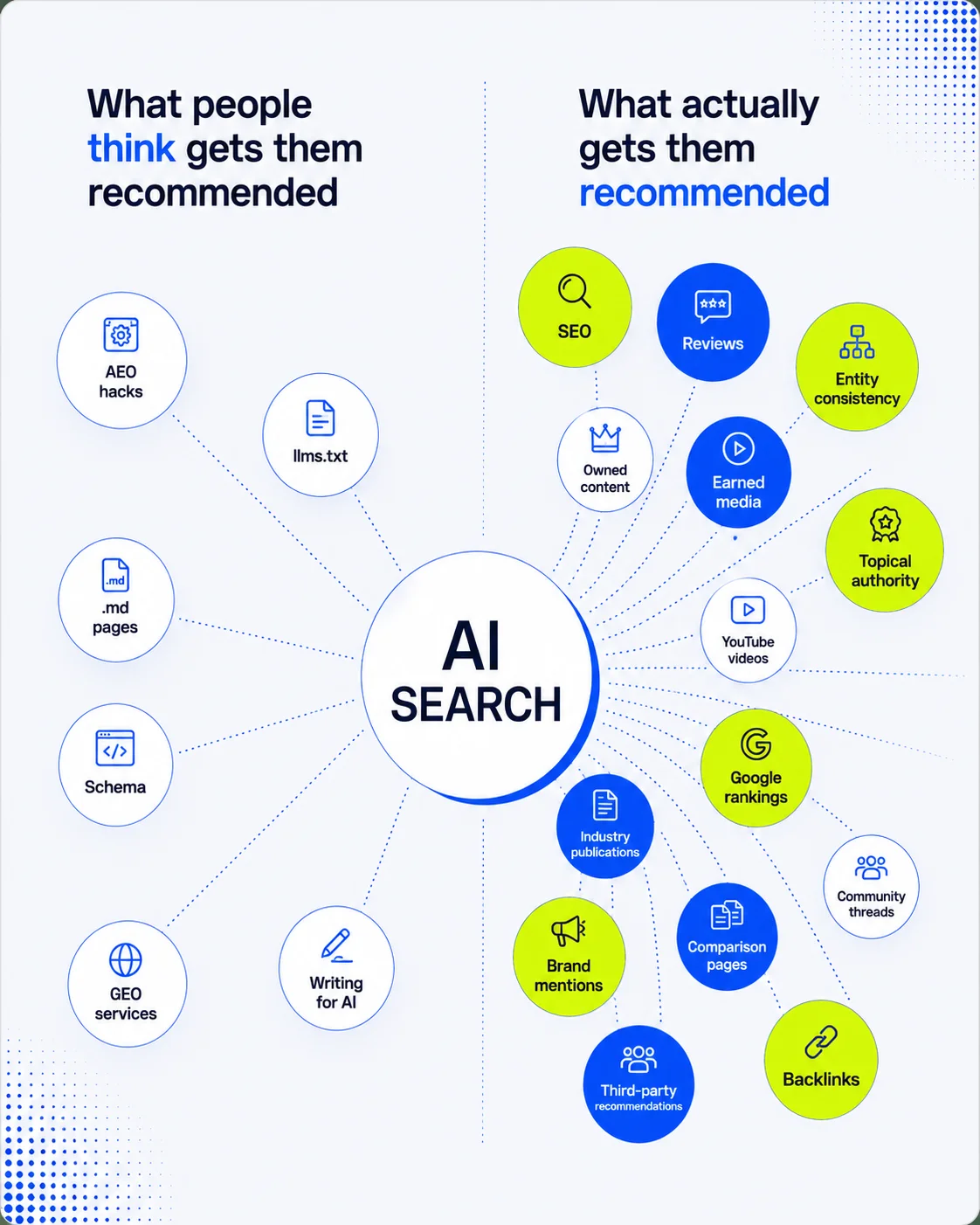
The brands gaining visibility in AI search are not simply publishing more content. They're publishing more valuable content.
Common patterns include:
Original Research: Unique data gives AI systems information they cannot find elsewhere.
Example- How ClickUp Scaled Visibility Through Original Research
ClickUp regularly publishes productivity and workplace studies based on proprietary survey data. Because the insights are unique, journalists, blogs, and increasingly AI search engines reference them as primary sources rather than secondary commentary.
Expert-Led Content: First-hand experience is harder for AI to replicate and easier to trust.
Example- How Supademo Turned Product Expertise Into a Growth Engine
Instead of publishing generic software tutorials, Supademo created highly specific comparison pages, product-led guides, and interactive demonstrations built around real user problems. These assets attracted high-intent traffic and became some of the company's strongest organic acquisition channels.
Digital PR: Media mentions strengthen brand authority across the web.
Example- How Zapier Built Authority Through Digital PR and Ecosystem Visibility
Zapier's growth wasn't driven solely by publishing content on its own website. The company built visibility through thousands of integration partnerships, guest contributions, media mentions, podcast appearances, and references across the SaaS ecosystem. As a result, Zapier is frequently cited as an authority in automation-related topics, giving both search engines and AI systems strong confidence in the brand's expertise.
Entity Building: Consistent brand information helps AI systems understand who you are and what you do.
Example- How HubSpot Became an Established Entity
HubSpot appears consistently across its website, LinkedIn profile, media mentions, partner directories, review platforms, podcasts, and educational content. Because the same company information, expertise areas, leadership team, and product positioning appear repeatedly across trusted sources, AI systems can confidently identify HubSpot as an authority on CRM, marketing automation, and inbound marketing.
Community Presence: Discussions on industry forums, Reddit, LinkedIn, podcasts, and expert communities create additional trust signals.
A growing conversation among marketers reflects this shift. Across SEO and digital marketing communities, many practitioners are moving beyond rankings and focusing on being cited inside AI-generated answers.
Example- How n8n Turned Community Into a Growth Engine
n8n's growth has been fueled by an active community that shares workflows, templates, tutorials, and use cases across Reddit, GitHub, YouTube, Discord, LinkedIn, and AI automation forums. As thousands of users discuss and recommend the platform, n8n generates trust signals that extend far beyond its own website. These community-driven mentions help both search engines and AI systems understand that the product is widely used and trusted within the automation space.
SEO Is Becoming a Visibility Discipline
For years, SEO was primarily about optimizing pages.
The next era is about optimizing presence.
Brands will still need:
- Technical SEO
- Site performance
- Structured data
- Content quality
- Backlinks
But those foundations alone won’t produce results.
The brands that win in AI search will be the ones that build authority beyond their own websites because when users ask AI for recommendations, explanations, or comparisons, the brands that get mentioned are often the brands that get remembered.
Conclusion
SEO is evolving dramatically.
The goal is no longer just to appear in search results. The goal is to become a source that search engines and AI systems trust enough to surface. Rankings can still create visibility, but trust is what earns inclusion in the answer itself.
The brands that thrive in the next era won't be the ones chasing every keyword. They'll be the ones creating expertise, insights, and authority that cannot be ignored because when AI decides which voices shape an answer, the winners won't simply be the brands that rank. They'll be the brands that have become impossible to leave out of the conversation.
And that may be the biggest shift in SEO since search began: success is no longer measured by where your website appears. It's measured by whether your brand is part of the answer.