
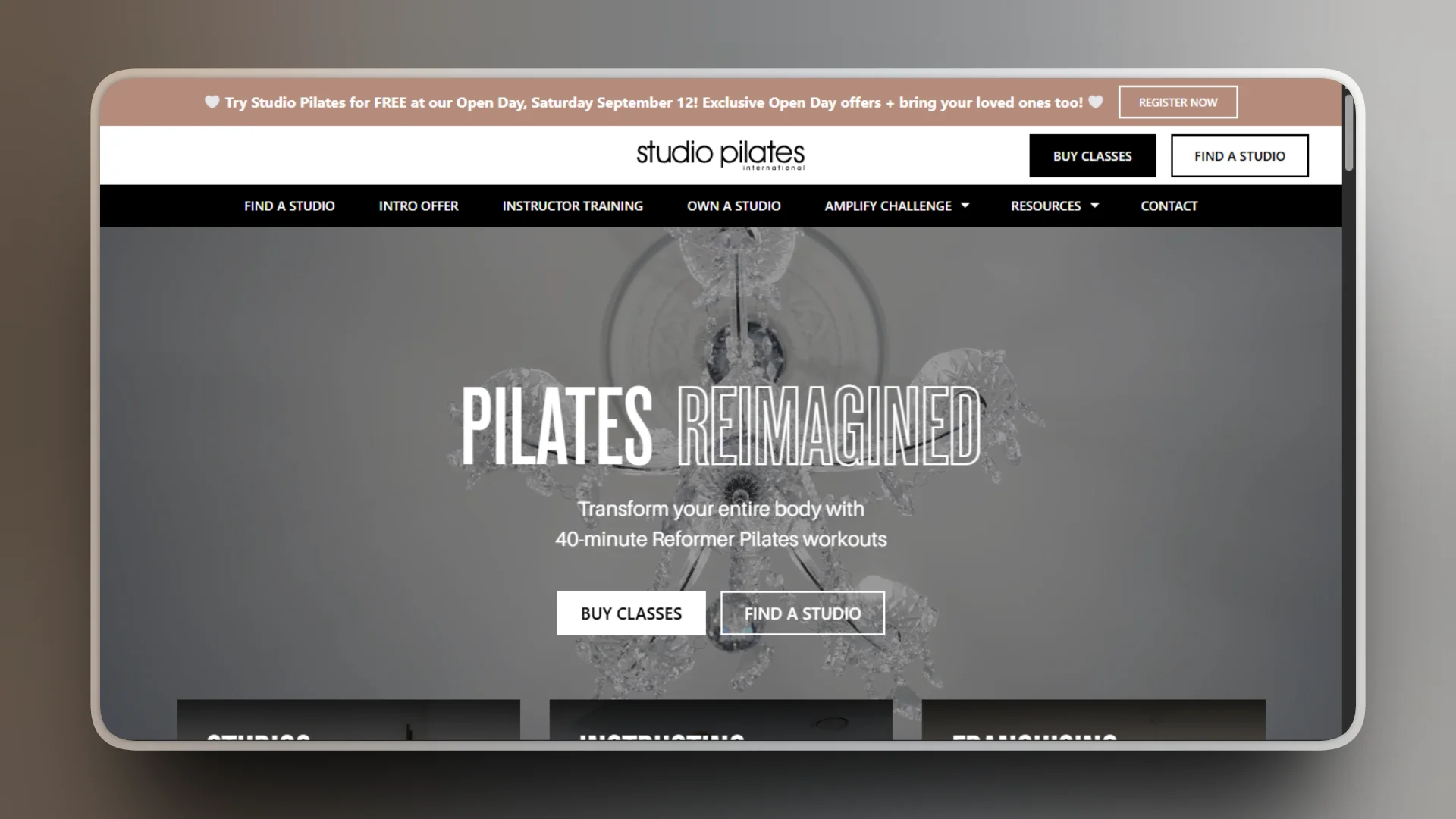
Studio Pilates International now has 125+ studios open, with another 70+ in development.
In 2025, the network recorded 2,705,588 client visits, with 3,787 trained instructors and 195 studios either open or on the way.
Heading into 2026, its U.S. studios reached a record average unit volume of $888,774. The brand is also signing new franchise agreements across the U.S. and expanding into Germany and Portugal.
There’s a lot that goes into that kind of expansion: franchise growth, referrals, community events, and everything that happens inside the studios themselves but there’s one thing that becomes harder as you add location after location: making sure people can find the new ones.
That gap between opening a location and being discoverable in the market is where local SEO starts to matter.
And Studio Pilates has built that layer underneath its expansion.
The Results Speak for Themselves
Before breaking down the strategies behind the growth, the numbers show that the strategy is already working.
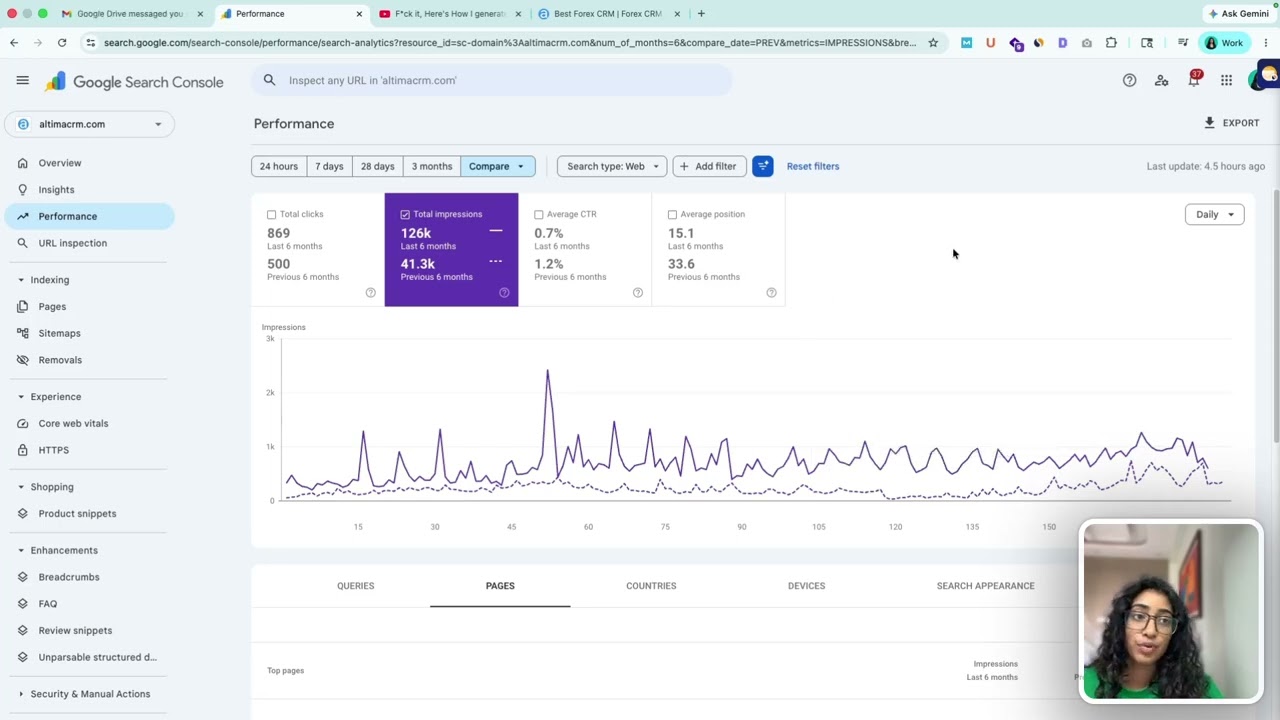
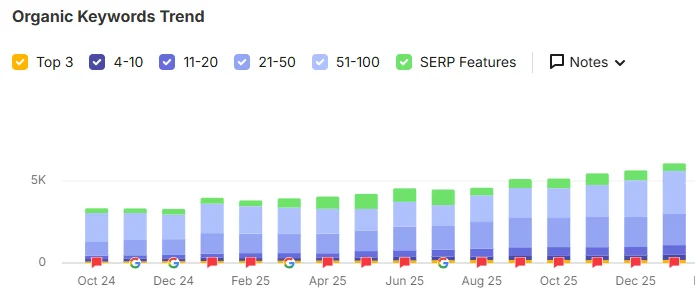
Organic keyword visibility has grown steadily since October 2024, from roughly 3,000 tracked keywords to more than 5,500 by early 2026. More importantly, the growth isn't concentrated in a single ranking position, it's spread across the SERPs, suggesting that more pages are steadily moving up the rankings rather than one or two pages driving a temporary spike.
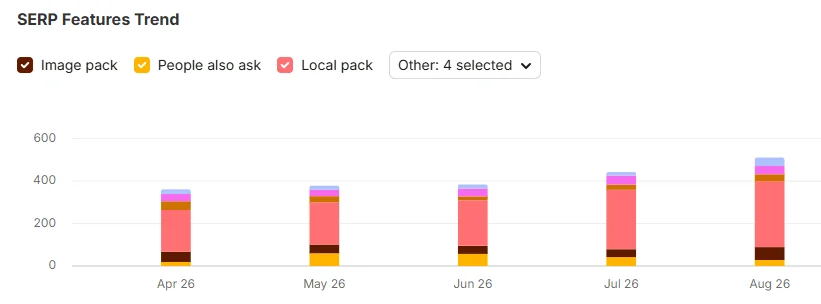
Local visibility has followed the same trajectory. Between April and August 2026, the number of keywords triggering Local Pack results increased from roughly 250 to more than 400. For a multi-location business like Studio Pilates International, that's particularly valuable because Local Pack is where searches such as "Pilates near me" turn into studio visits and bookings.
The pattern is clear. The site isn't just ranking for more keywords; it's becoming more visible in the local searches that matter most to a growing studio network. As new locations open, that organic visibility gives each studio a stronger chance of being discovered by people actively looking for Pilates nearby.
Key Drivers Behind the Growth
Studio Pilates' organic model rests on:
- Franchise-led local expansion: New studios opened by local owners in their own markets
- Free Open Day events: Trial workouts with referral credits and giveaways
- Referral and community incentives: Client-to-owner stories, word-of-mouth built into the model
- Content marketing and storytelling: Content covering beginner questions, results, and franchise opportunities
- Local SEO: The discovery layer under every new location
- Email and owned audiences: Newsletters nurturing people who aren't ready to book yet
Each of these strategies plays a vital role in the growth while SEO sits underneath them, helping people find and act on what the brand is already doing. Let’s break down how they work together.
Franchise Growth Needs a Discovery Layer Here's the part that's easy to miss: opening a new studio doesn't make it findable. A brand-new studio in a new location has zero search history, reviews, and rankings on day one.
Every time Studio Pilates opens a new location, someone nearby is already typing "reformer Pilates near me" or "Pilates studio [city]" into Google. If that new studio isn't optimized to show up, the franchise growth doesn't convert into visits, it just sits there.
This is where local SEO does its actual job. Based on how multi-location fitness brands structure this, and how Studio Pilates' own city-specific blog content behaves, each new studio needs its own location page matched exactly to its Google Business Profile having same name, address, phone number, local keywords in the title and headers, and a direct "book a trial" path. Local citation consistency across Yelp, Apple Maps, and Bing signals to Google that this is a real, distinct business worth trusting in the map pack.
All these efforts are non-negotiable when you’re opening locations at this pace. They make sure each new studio can be found by people searching for Pilates in that area.
The Opportunity Behind Open Days Event
The Open Day format is straightforward: free Reformer Pilates workouts, exclusive one-day offers, prizes, and referral credit for bringing a friend. As a social and email push, it drives a burst of interest for a few days.
Give that same offer its own page, optimized for phrases like "free Pilates class [city]" or "Pilates open day," and it keeps working long after the original post stops circulating. Someone searching for a free trial three months from now can still land on it. Linking that page from the blog and from location pages passes search authority through the site and keeps the offer easy to find on its own.That's how Open Day evolved from an event into a search channel.
Referrals Land Better When the Studio Already Looks Credible Online
Referral credit is built into the Open Day offer, and franchisee stories like a client who eventually became a two-studio owner, does a lot of the emotional work of word-of-mouth. But a referral only goes as far as the moment someone checks the studio out online.
That's where review volume and response time matter. Studios that collect reviews steadily and respond to them within a couple of days tend to rank better locally and convert better once someone lands on the page. Local testimonials on each studio's page reinforce the same trust a referral is trying to build. Guides like "A Guide To Finding The Best Pilates Franchise In The UK" add another layer of proof for anyone comparing options before committing.
A friend's recommendation gets someone curious but what they find when they Google it afterward decides whether they book.
The Foundational Content Architecture
Studio Pilates’ blog isn’t built around one generic audience, it’s structured around search intent. You can broadly see three content buckets at work:
1. Informational: Answering the “Should I?” questions
This is content built for people who are still researching. Searches like “Is Reformer Pilates hard for beginners?”, “Can Reformer Pilates build muscle?” or “How often should you do Reformer Pilates?” are informational in nature.
The reader isn’t necessarily ready to buy yet. They’re trying to understand the category, overcome objections and figure out whether Pilates is right for them.
For Studio Pilates, these articles work as top-of-funnel discovery content. They capture long-tail searches, establish topical authority and introduce the brand before the reader ever reaches a booking page.
2. Commercial: Helping people compare their options
The next layer targets people who have moved from “What is this?” to “Which option should I choose?”
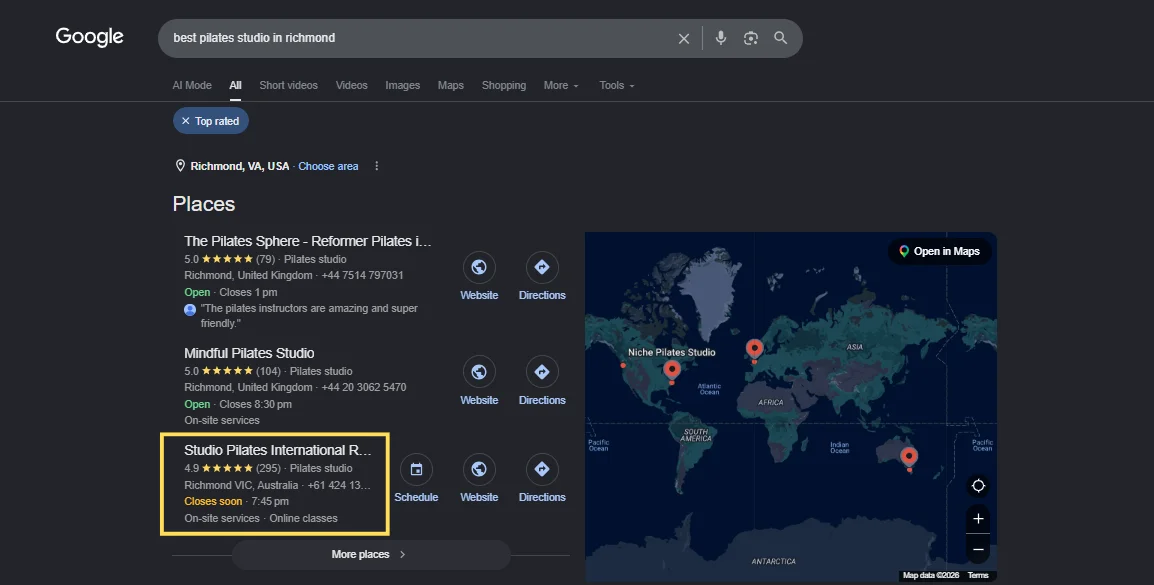
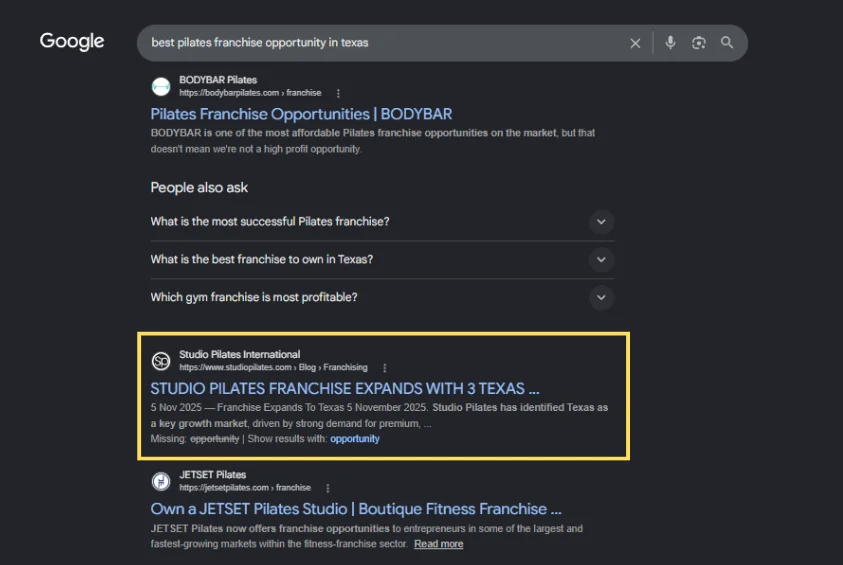
This is where searches around “best Pilates studio,” “best Pilates franchise,” or “best Pilates franchise to open in the USA” come in.
The user has already identified the category. Now they’re evaluating providers, models or opportunities.
For Studio Pilates, this content can serve two very different commercial audiences: prospective customers evaluating Pilates options, and prospective franchisees evaluating business opportunities. That makes these pages particularly valuable because they sit much closer to a decision.
3. Transactional: Capturing the “I’m ready” moment
Transactional content targets searches where the user already has a strong intent to take action whether that means booking a class, starting a trial, contacting a studio, or exploring a franchise opportunity.
At this stage, the job of content isn't to educate extensively. It is to reduce friction between search and conversion.
The important part is that these three layers aren't isolated blog categories. They form a search-to-conversion architecture:
Informational → build awareness and answer objectionsCommercial → influence consideration and comparisonTransactional → convert existing intent into action
So rather than treating the blog as a publishing channel, Studio Pilates is effectively using it as a distributed acquisition funnel, creating pages for different levels of intent and giving each one a clear next step.
One blog, multiple search journeys, and content mapped to what the user needs at each stage.What Most Studio Owners Get Wrong About ThisThe instinct, when a studio isn't growing, is to reach for paid ads or a flashier Instagram strategy. Studio Pilates' setup suggests the opposite worked better for them: structural SEO pages, location pages, review velocity, NAP consistency, and content that answers real objections is what let every other strategy (referrals, events, franchise expansion) actually convert.
Referrals don't work if the person searching your studio afterward can't find you, or finds three reviews from 2022. Free events don't compound if the page disappears after the campaign ends. SEO is what ties all of these efforts together, making sure the demand they create can actually find its way back to the business.
As the brand grows, these fundamentals become even more important for organic growth and visibility. Clear location information, useful content and consistent signals give search engines and AI answer engines what they need to understand the business and surface it to the right people.
What This Means If You Run a Pilates Studio
You don't need 125 locations for this to apply. You need:
- A location page (or homepage, if you're single-site) built around exactly what people search for in your city
- A Google Business Profile that's active weekly, not updated once and forgotten
- Content that answers real beginner objections, not generic "why Pilates is good for you" filler
- A referral or trial offer that has its own findable page, not just a one-time Instagram story
None of this replaces community, referrals, or a great instructor. It's the layer that makes sure those things actually get found.
If you're a studio owner trying to figure out where you're losing visibility, that's the work we do. Let’s find the gaps in your local SEO and content and see what’s worth fixing first.