
Most AI startups approach organic marketing the same way. They publish blog posts, target high-volume keywords, and hope traffic turns into customers. While that strategy can generate visibility, it rarely builds lasting competitive advantage.
Sarvam AI has taken a different path.
Rather than treating SEO as a standalone marketing function, the company appears to have built an organic growth system where documentation, developer experience, product-led growth, and AI discoverability reinforce one another. Every public asset, from technical documentation to product launches, contributes to a larger flywheel that compounds trust and visibility over time.
This approach is especially relevant today. Developers and enterprise buyers no longer discover products exclusively through Google. They explore GitHub repositories, API documentation, Reddit discussions, benchmark reports, YouTube demos, and increasingly, AI assistants like ChatGPT and Perplexity. Winning organic growth means showing up consistently across this entire discovery journey.
In this case study, we'll break down the public strategies behind Sarvam AI's organic growth and, more importantly, the lessons B2B and AI SaaS founders can apply to build a similar compounding growth engine.
About Sarvam AI
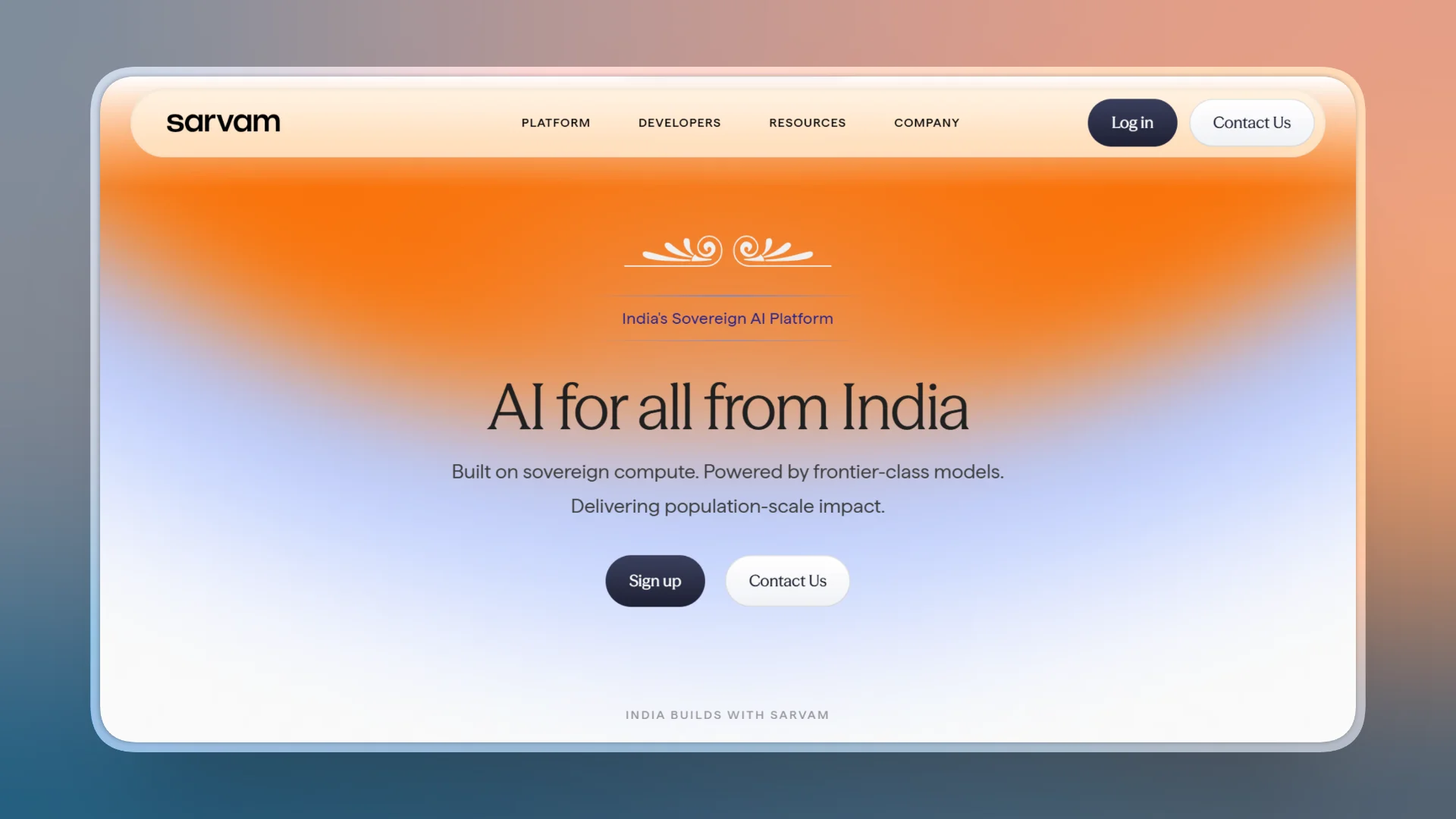
Sarvam AI is an India-based AI company building foundational models and enterprise AI infrastructure with a strong focus on multilingual and speech AI. Founded by Vivek Raghavan and Pratyush Kumar, the company positions itself around a clear mission: building Sovereign AI for India.
Its product ecosystem spans multilingual large language models, speech recognition, text-to-speech, conversational AI, developer APIs, and enterprise AI solutions designed for India's diverse linguistic landscape.
What's interesting isn't just what Sarvam builds, it's how the company has built discoverability around those products. Instead of relying on aggressive paid acquisition or publishing hundreds of SEO-driven blog posts, its public strategy appears centered on creating high-value assets that naturally attract developers, enterprises, media attention, and AI search visibility.
Sarvam's Organic Growth Flywheel
Many companies think of SEO as a linear funnel.
Search → Website → Demo Request
Sarvam's public strategy suggests a more interconnected model.
Category Positioning → Technical Documentation → Developer Discovery → Product Experience → Community & PR→ AI Search Visibility → Enterprise Trust
Each stage strengthens the next.
A developer discovers the documentation through search, experiments with the product, shares their experience with others, creates discussions and references, strengthens the brand's authority, and ultimately makes the company easier to discover across both traditional and AI-powered search.
Unlike paid campaigns that stop producing results when budgets disappear, this type of organic system compounds over time.
Let's look at the five pillars behind it.
1. Owning a Category Before Chasing Keywords
One of the biggest mistakes startups make is trying to rank for every relevant keyword in their industry.
The strongest brands do the opposite.
They become synonymous with one clear idea.
For HubSpot, it was inbound marketing.
For Stripe, developer payments.
For Sarvam AI, it's Sovereign AI for India.
This positioning goes far beyond a tagline. It consistently appears across product launches, customer stories, engineering updates, partnerships, and enterprise messaging. Rather than competing as another general-purpose AI company, Sarvam has built a focused identity around multilingual AI and India's digital ecosystem.
From an SEO and GEO perspective, this consistency is powerful.
Search engines and AI assistants increasingly rely on entities and topical authority rather than isolated keywords. When every public asset reinforces the same expertise, it becomes easier for search systems to understand what a company represents and when it should be recommended.
Another advantage is trust. Before users evaluate technical capabilities, they first need confidence that a company understands their problem. A focused positioning creates that confidence faster than a broad, generic message.
For founders, the lesson is simple:
Don't try to own every AI conversation. Own one category so well that search engines, AI models, and customers naturally associate your brand with it.
2. Documentation Is Their Strongest SEO Asset
Most SaaS companies treat documentation as a support resource.
Developer-first companies treat it as customer acquisition.
Think about how developers search.
They rarely type "best AI platform."
Instead, they search for highly specific implementation queries like:
- Speech-to-text API for Indian languages
- Multilingual LLM API documentation
- Python speech recognition API
- Voice AI API examples
These are some of the highest-intent searches on the internet because the user isn't researching anymore, they're trying to build.
Well-structured documentation naturally aligns with these queries.
Instead of forcing developers through marketing pages, documentation answers their questions immediately with implementation guides, API references, code samples, authentication instructions, and tutorials.
This also shortens Time-to-Value—the time between discovering a product and experiencing its first successful outcome.
A typical B2B funnel looks like this:
Search → Landing Page → Demo → Sales Call
A developer journey is much shorter:
Search → Documentation → API Call → Working Prototype
Every unnecessary step introduces friction.
By reducing that friction, documentation becomes more than technical content. It becomes one of the company's highest-converting acquisition channels.
Documentation also compounds better than traditional blogs.
Unlike trend-driven articles that lose relevance, API documentation evolves alongside the product. As new features are added and examples are updated, the content remains valuable to users while continuously reinforcing topical authority.
For AI assistants, documentation is equally important. Clear explanations, structured content, implementation examples, and consistent terminology make it easier for LLMs to retrieve accurate information when users ask technical questions.
Key takeaway: Treat documentation like a product, not a support center. Your highest-intent users are often reading your docs before they ever speak to sales.
3. Product-Led Growth Turns Traffic into Adoption
Getting someone to your website is only half the battle.
The real question is:
How quickly can they experience value?
Traditional marketing measures success through traffic, downloads, or demo requests.
Product-led companies focus on activation.
For an AI platform, activation could mean:
- Completing a first API call
- Testing a multilingual model
- Translating an audio file
- Building a voice workflow
- Successfully integrating an SDK
This is where Sarvam's ecosystem of APIs, documentation, and interactive experiences works together.
Instead of asking users to trust product claims, they can explore capabilities directly through product experiences like Sarvam Studio and developer APIs. That hands-on interaction builds confidence far faster than a brochure or webinar ever could.
This has another important effect on organic growth.
When developers successfully build with a product, they naturally create new content around it. They publish GitHub projects, write tutorials, answer community questions, record YouTube walkthroughs, or recommend the tool internally.
Those activities generate:
- Brand mentions
- High-quality backlinks
- Community discussions
- Branded search demand
- Additional organic discovery
In other words, the product becomes a marketing channel.
Rather than ending at a pageview, organic traffic feeds directly into product usage, which creates new content and conversations that bring even more users into the ecosystem.
That's the essence of Product-Led Growth.
Instead of thinking:
Traffic → Leads
Think:
Traffic → Product Experience → Advocacy → More Traffic
For B2B AI companies, this shift is significant. Enterprise buyers increasingly expect to validate products before talking to sales. Reducing the distance between discovery and product value doesn't just improve conversions, it creates a self-reinforcing acquisition loop.
Key takeaway: Don't optimize your SEO strategy for clicks. Optimize it for the first meaningful product experience. The faster users experience value, the more likely they are to become advocates who fuel your next wave of organic growth.
4. Optimizing for AI Search, Not Just Google
Search has fundamentally changed.
A few years ago, most buyers discovered software through Google and clicked through multiple websites before making a decision.
Today, they increasingly ask AI assistants:
- What's the best multilingual speech AI platform?
- Which LLM supports Indian languages?
- What's the best API for voice AI?
Instead of showing ten blue links, AI assistants synthesize answers from trusted sources across the web.
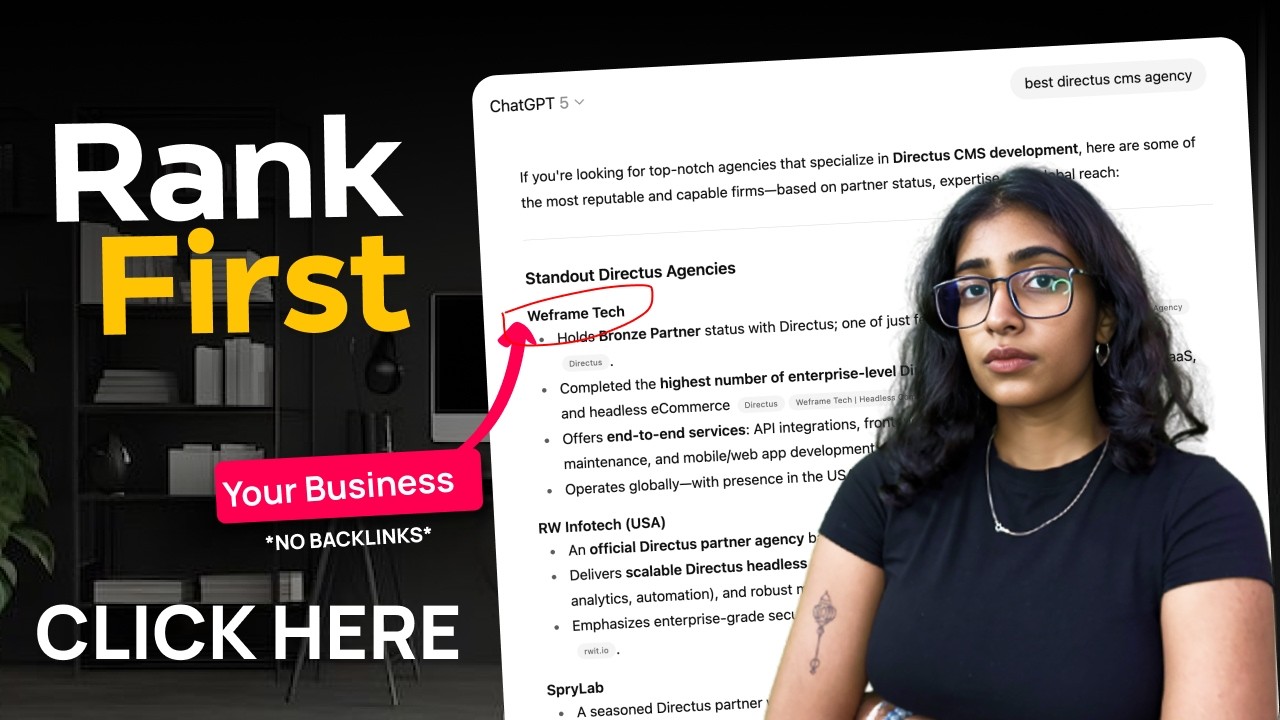
This shift has given rise to Generative Engine Optimization (GEO): optimizing content so AI systems can confidently understand, retrieve, and recommend your brand.
Sarvam appears well-positioned for this transition because its public footprint consistently reinforces the same entities:
- Sovereign AI
- Indian languages
- Speech AI
- Enterprise AI
- Foundation Models
- Developer APIs
That consistency matters.
LLMs don't just retrieve keywords; they build confidence from repeated associations across documentation, research, product pages, customer stories, and third-party mentions.
Another notable aspect is Sarvam's emphasis on technical content over promotional copy. Product documentation, engineering updates, model announcements, and customer stories provide factual, structured information that's easier for AI systems to interpret than marketing-heavy landing pages.
Public milestones including funding announcements, product launches, benchmark discussions, and enterprise deployments, also generated coverage across respected publications, strengthening Sarvam's authority beyond its own website.
The takeaway isn't that founders should optimize specifically for ChatGPT or Gemini.
It's that companies should publish content that's accurate, structured, and consistently reinforces what they want to be known for.
That's good SEO as well as GEO.
Key takeaway: AI assistants reward clarity and consistency. Build content that makes it obvious what your company does, who it serves, and why it's credible.
5. Developers Became the Distribution Channel
Traditional SaaS marketing often treats distribution as something marketing owns.
Developer-first companies know better.
Developers become the distribution.
Sarvam's public strategy extends beyond publishing documentation. Its emphasis on developer APIs, open ecosystems, technical content, and experimentation encourages builders to engage directly with the product.
When developers build something valuable, they naturally create secondary content:
- GitHub repositories
- Technical tutorials
- Community discussions
- Conference talks
- Product recommendations
- Internal knowledge sharing
Each of these becomes another discovery channel.
Unlike paid campaigns, these conversations continue attracting users long after they're published.
This creates a classic flywheel:
Useful product → Developer adoption → Community content → Brand mentions → More discovery → More developers
The key isn't forcing people to talk about your product.
It's giving them something worth sharing.
That's one reason documentation, product quality, and developer experience matter so much. They're not just improving user satisfaction, they're creating future marketing assets.
Key takeaway: Marketing shouldn't end when someone signs up. Every successful user has the potential to become your next acquisition channel.
The Playbook Every AI SaaS Founder Can Steal
Sarvam's growth strategy isn't about publishing more content.
It's about building a system where every part of the business strengthens organic discovery.
Here's what that looks like in practice.
Instead of
Build this
Publishing dozens of generic blogs
Own a clear category with consistent messaging
Treating documentation as support
Treat documentation as an acquisition channel
Measuring traffic
Measure activation and first successful product experience
Optimizing only for Google
Build content AI assistants can confidently retrieve
Chasing backlinks
Create products and resources developers naturally reference
Separating product and marketing
Design product experiences that accelerate adoption
One-off campaigns
Compounding organic flywheels
The common theme is simple:
Organic growth isn't created by a marketing team alone.
It requires alignment across product, engineering, developer relations, customer success, and content.
A Practical Framework for Building Your Own Organic Growth Engine
If you're building an AI SaaS company, ask these seven questions:
1. Do you own a category?If someone describes your company in one sentence, would every customer give the same answer?
2. Can developers find implementation answers through search?Documentation should solve real technical problems, not simply explain product features.
3. How quickly can users experience value?Every additional click between discovery and success reduces conversion.Reduce Time-to-Value wherever possible.
4. Are you creating assets AI systems can understand?Clear documentation, structured product pages, research, and customer stories are more valuable than keyword stuffing.
5. Does your product generate conversations?Products that help users succeed naturally create tutorials, demos, GitHub projects, and recommendations.
6. Are marketing and product working together?The best acquisition channels often sit inside the product experience itself.
7. Are you measuring outcomes instead of traffic?Traffic is a vanity metric. Activation, product-qualified leads, and customer adoption are growth metrics.
Why This Matters More Than Ever
The future of organic marketing won't belong to companies that publish the most articles. It will belong to companies that create the most trustworthy ecosystem around their products.
That ecosystem includes:
- Strong positioning
- High-quality documentation
- Product experiences
- Technical education
- Community engagement
- Customer validation
- Consistent public messaging
Each reinforces the others.
Search engines recognize it.
AI assistants retrieve it.
Customers trust it.
That's why organic growth becomes increasingly difficult to copy once the flywheel is in motion.
Final Thoughts
Sarvam AI demonstrates an important shift in how modern AI companies should think about organic growth.
Its public strategy suggests that sustainable visibility isn't built through isolated SEO tactics. It's built by connecting category positioning, developer documentation, product-led growth, community adoption, and AI discoverability into a single compounding system.
For B2B and AI SaaS founders, the lesson is clear: don't treat SEO, content, documentation, product, and developer relations as separate initiatives. Treat them as parts of one growth engine.
That's exactly how we approach organic marketing at Ehroo.
Instead of optimizing individual pages, we build systems that help companies earn visibility across Google, ChatGPT, Perplexity, and other AI-native discovery platforms, while turning that visibility into qualified pipeline.
Because the companies that will dominate search over the next decade won't simply have the best content.
They'll have the strongest ecosystem of trust around their product.